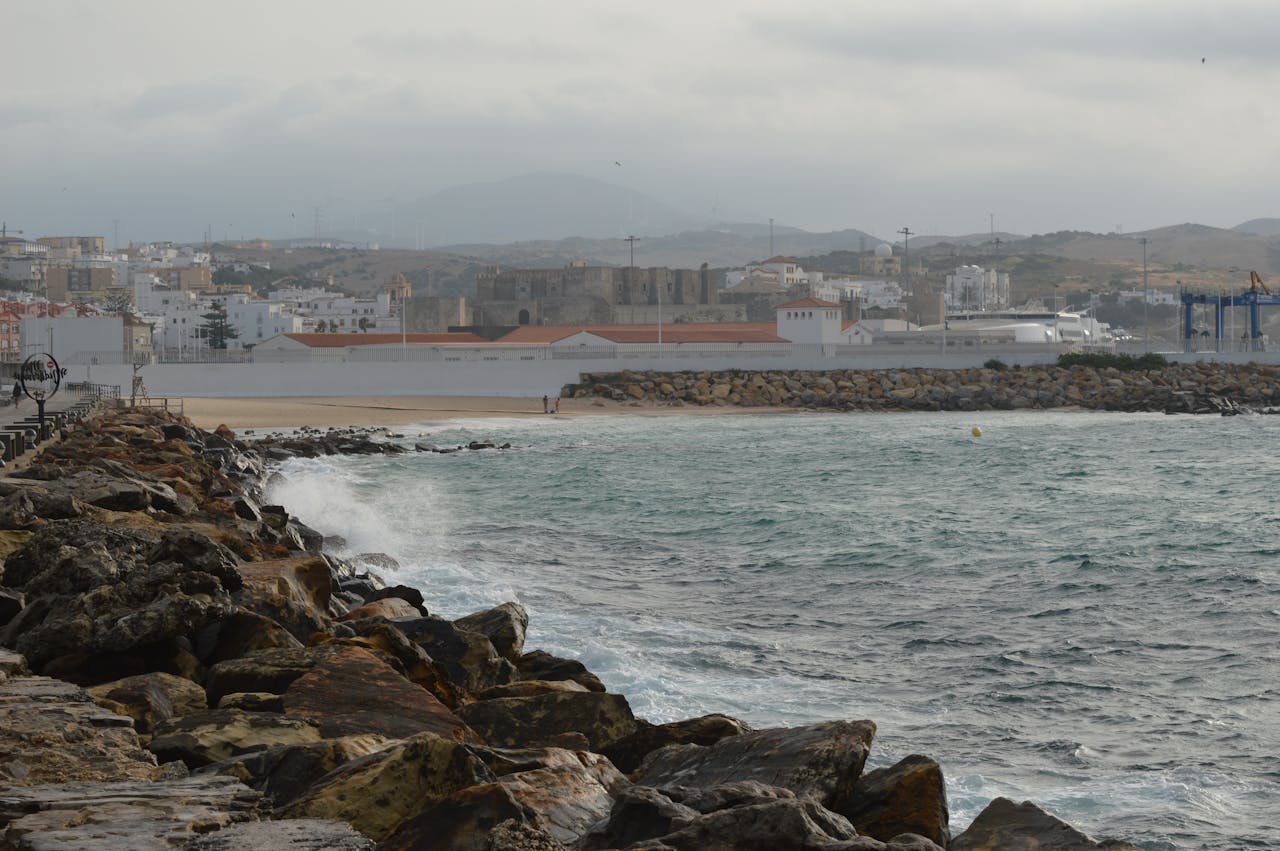
Cádiz · One Province, Two Seas
Architecture of Wind and Salt — Costa de la Luz, Cádiz
In Cádiz the wind is not an obstacle — it is the invisible architect that shapes every building. One province, two seas: the wild Atlantic of the Costa de la Luz, home to one of Europe's most singular architectural traditions, and the Mediterranean calm of Sotogrande.
3,000
Years of building tradition
+100 km
Of unspoilt Atlantic coast
↑
Highest appreciation potential in Spain
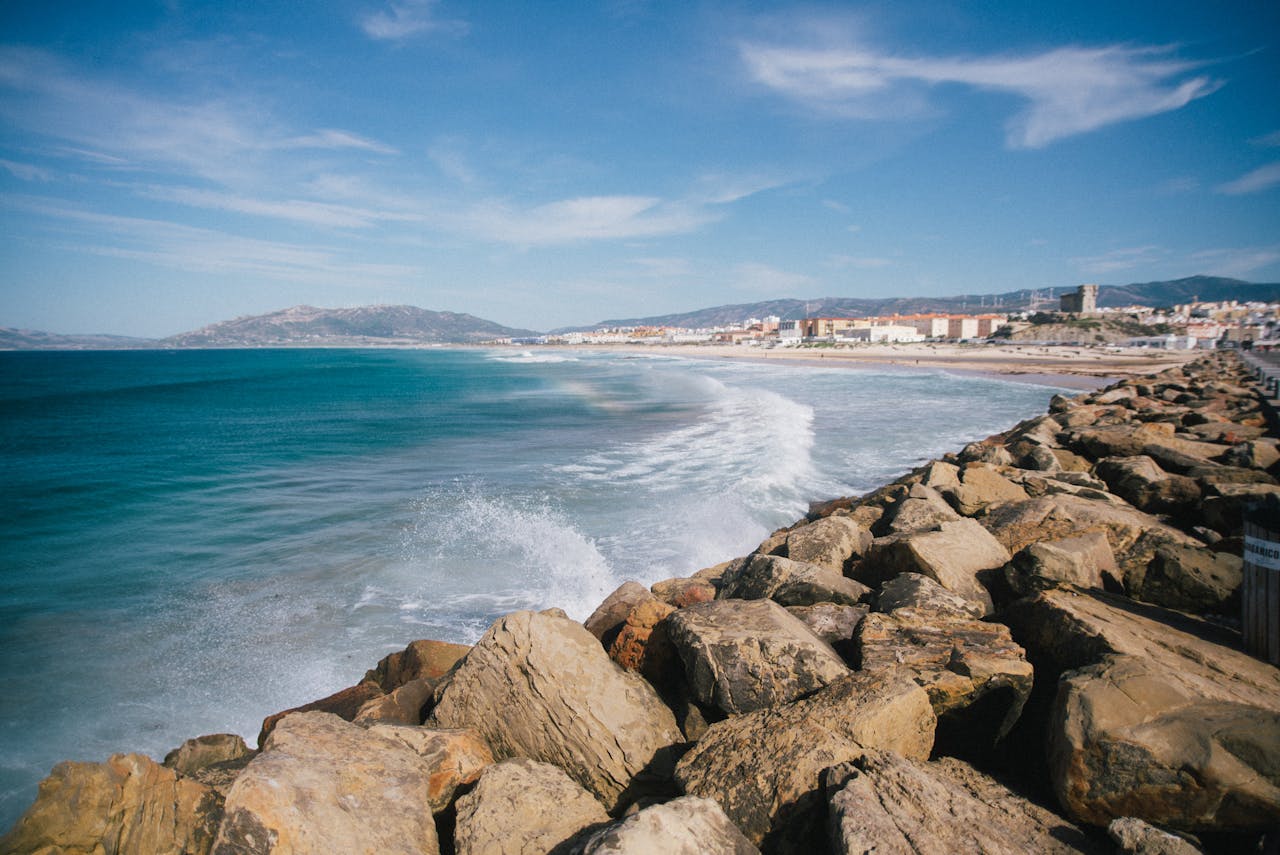
An architecture that has been answering the same place for 3,000 years
The Phoenicians built in Cádiz before anywhere else in the West. They chose ostionera stone — the one the sea had formed over millennia from oyster shells — and with it raised a city that still stands. It was no accident: that material breathes, regulates, resists. Salt does not wear it away. Time only improves it.
The architecture of the Costa de la Luz has always had a demanding interlocutor: the wind. The Levante — strong, dry, constant — and the Poniente — humid, soft, Atlantic — define every façade, every courtyard, every cantilever in this territory. To build well here means understanding those winds before tracing a single line.
The villas we present on this coast are not simply luxury properties facing the sea. They are architectural responses to an extraordinarily specific place — and that dialogue is what makes them unique.
The elements
The four elements that define the architecture of Cádiz
There is no luxury architecture possible on the Costa de la Luz without first understanding the place. These are the four factors any serious project must incorporate from the very first sketch.
The Levante and Poniente Winds
Two opposing forces that shape every façade, cantilever and courtyard of Cádiz architecture. A well-oriented villa on the Costa de la Luz turns the strongest wind in Europe into free natural ventilation.
Ostionera Stone
A material of fossilised shells, unique to Cádiz. It resists salt without treatment, regulates temperature through its natural porosity and develops a golden patina that ages with dignity beside the sea.
The Salt Flats
The landscape that defines the Costa de la Luz: water, salt, light and horizon. Villas that open onto the salt flats have access to one of the most complete silences in Western Europe.
The White Villages
Vejer, Conil, Tarifa — whitewashed to reflect the sun, built to capture the breeze. Lime is the oldest and most effective solar insulator known. A 3,000-year-old technology that remains unsurpassed.
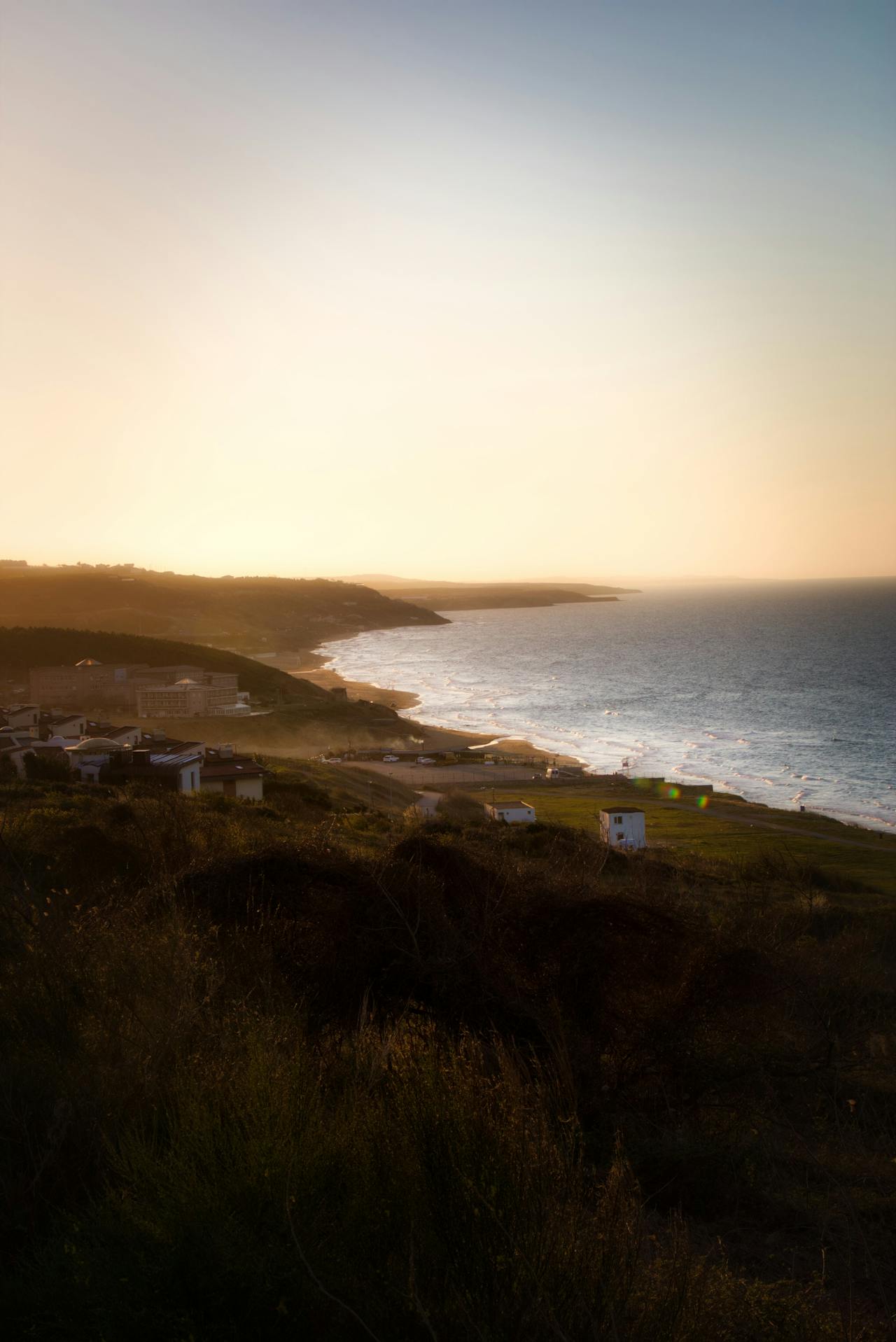
"A different kind of buyer seeks the Costa de la Luz. They are looking for authenticity, silence and a landscape that has not yet been entirely discovered."
Kaluma Living
References
Contemporary Architecture in Cádiz, from Coast to Coast
Three projects that prove luxury and respect for place are not mutually exclusive — they are the same thing.
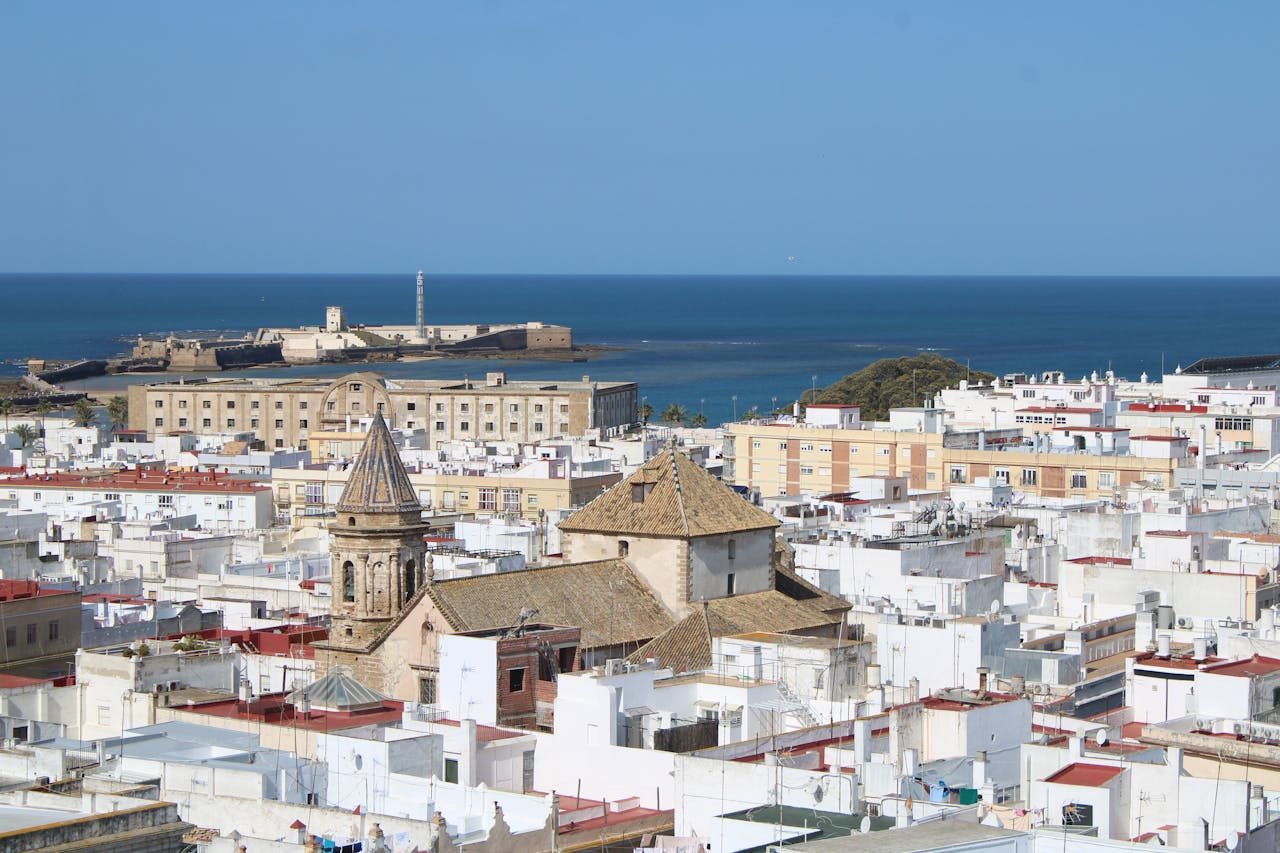 Sustainable Luxury
Fairmont La Hacienda, La Alcaidesa
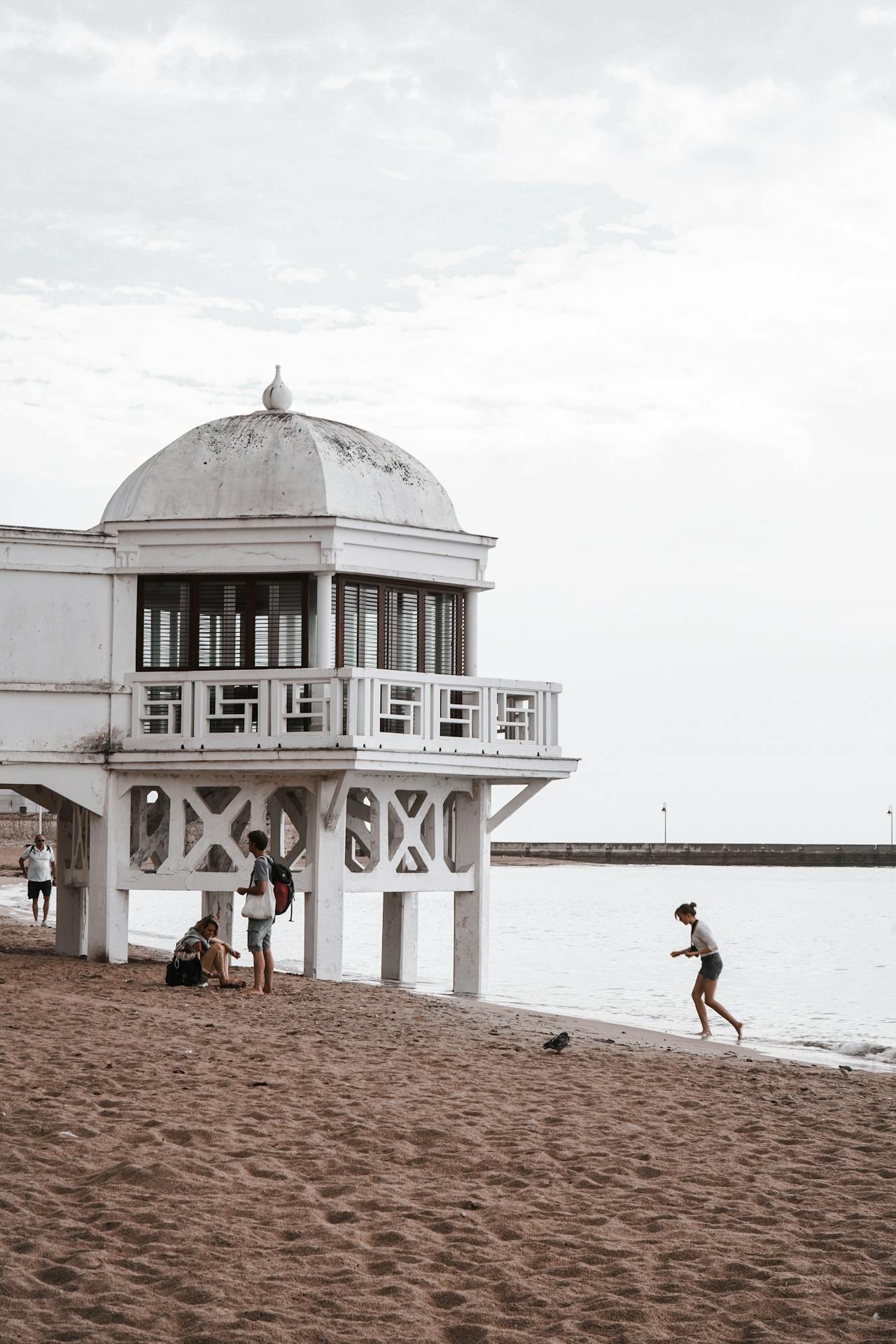
A contemporary benchmark for luxury on Cádiz's Mediterranean shore, with the Rock of Gibraltar on the horizon. It reinterprets the vernacular Andalusian language with interior courtyards, lattices and porticoes. Aerothermal systems, green roofs and native planting as standard, not as an option.
 Response to Place
MAR Studio — Architecture in Tarifa
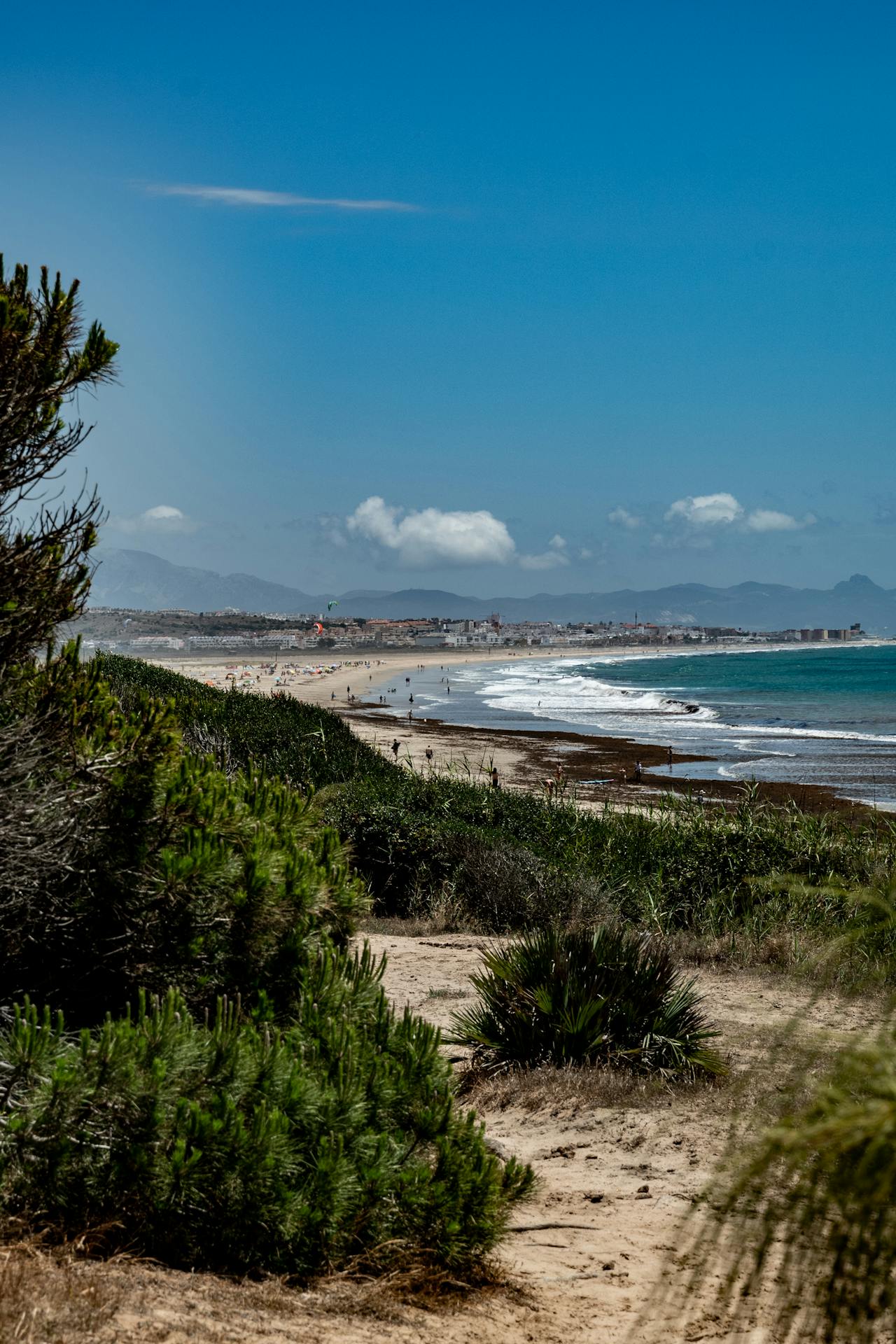
A reference Cádiz architecture practice for bioclimatic design in the Atlantic environment. Their projects in Tarifa always begin with a thorough analysis of prevailing winds, materials available within a 50 km radius and natural cross-ventilation. The result: houses that breathe by themselves.
 Pure Atlantic Luxury
Zahara de los Atunes
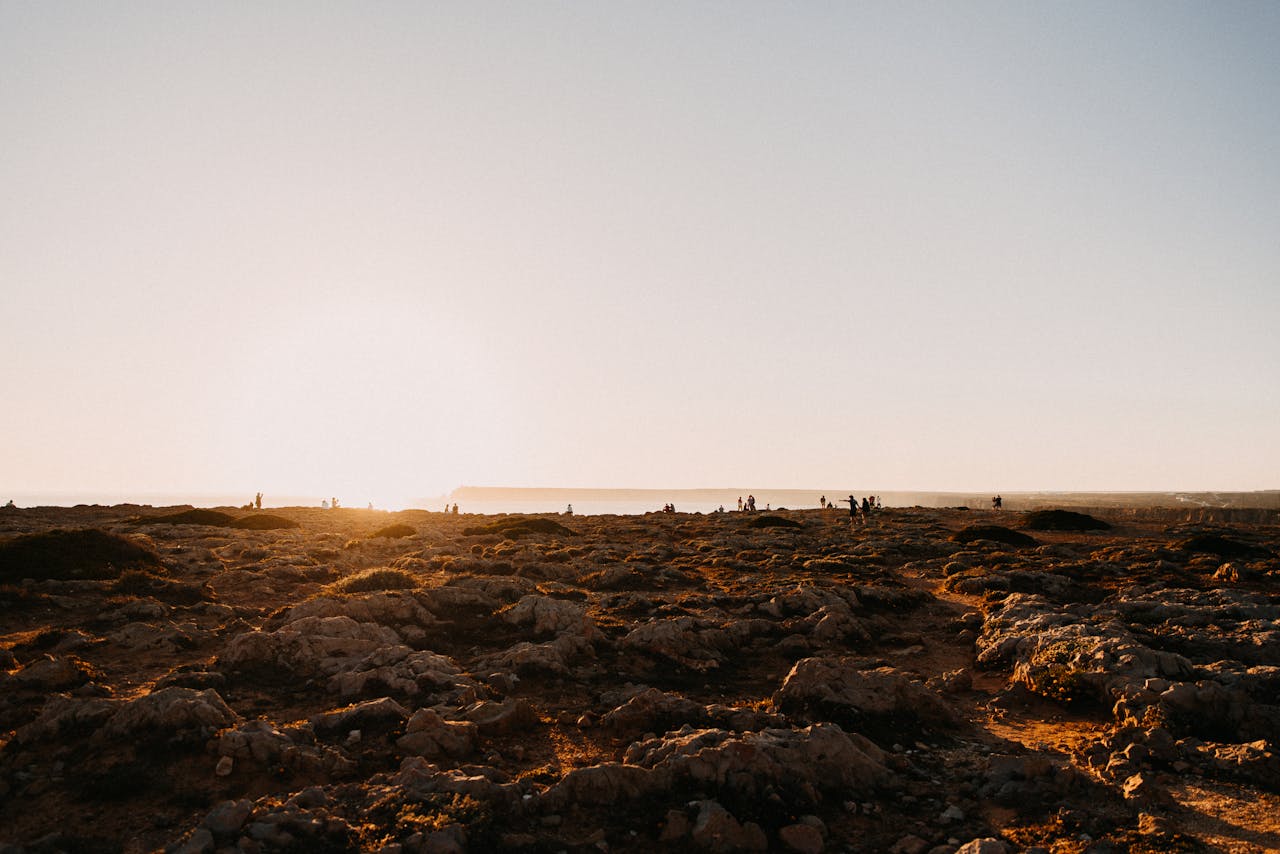
The most authentic enclave on the Costa de la Luz. Villas integrated into the wild Atlantic landscape between La Breña Natural Park and the Strait of Gibraltar. One of the last untouched coasts in Western Europe with access to private luxury properties.
Principles
Five design principles for the Costa de la Luz
Strategic Orientation
Façades oriented to take advantage of the south-westerly sea breeze and to shelter from the Levante. In Tarifa, orientation can be the difference between living and merely enduring.
Local Stone Walls
Ostionera stone and thick masonry that absorb heat by day and release it by night — passive thermal regulation with zero energy consumption.
Interior Courtyards
The heart of Andalusian life and the most intelligent thermal regulator in vernacular architecture. A well-designed courtyard keeps the home several degrees cooler than the exterior.
Native Vegetation
Stone pines, broom, sea lavender, coastal junipers. Gardens that respect the dune ecosystem and require no irrigation after the first year.
Eternal Materials
Local eucalyptus, ostionera stone, lime and esparto — materials that improve over time and need no intensive maintenance against the salt.

One province, two seas
Two coasts. Three buyer profiles. One single standard.
Sotogrande & La Alcaidesa
Where luxury meets the Mediterranean
The most established luxury market in the province — on Cádiz's Mediterranean shore, looking towards Gibraltar. Polo fields, world-class golf, a private marina. La Alcaidesa concentrates the most ambitious prime new-build residential projects on this coast.
Atlanterra & Tarifa
Absolute privacy with views of the Strait
Among the most secluded properties on the Costa de la Luz. With Morocco visible on clear days and the wind as the only neighbour, Atlanterra offers a kind of privacy that is rare on the Mediterranean side.
Zahara & Conil
The new emerging Atlantic luxury
Protected dunes, almadraba tuna and a gastronomy of the territory that has won over the most demanding international buyer. Price per square metre remains well below its potential — the market has not yet fully discovered it.
Cádiz — Architecture of Wind and Salt
Frequently asked
Cádiz — What we are most often asked
¿Qué hace única a la arquitectura de la Costa de la Luz?
La arquitectura de la Costa de la Luz es única porque responde a dos interlocutores extraordinariamente exigentes: el viento del Estrecho y la luz atlántica. El Levante y el Poniente — los vientos más característicos de Cádiz — definen cada fachada, cada patio y cada voladizo. Los materiales son igualmente únicos: la piedra ostionera (formada por conchas fosilizadas) resiste el salitre sin tratamiento y desarrolla con el tiempo una pátina dorada insustituible. El resultado es una arquitectura que no se puede copiar en otro lugar.
¿Cuáles son los mejores enclaves para villas de lujo en Cádiz?
Los enclaves de referencia se reparten entre las dos costas de la provincia de Cádiz. En su litoral mediterráneo, Sotogrande y La Alcaidesa concentran el mercado de lujo más consolidado de la provincia, con polo, golf y marina privada. En la Costa de la Luz — la costa atlántica — destacan Atlanterra y Tarifa (máxima privacidad con vistas al Estrecho y a Marruecos) y Zahara de los Atunes y Conil (el nuevo lujo atlántico emergente, con dunas protegidas y gastronomía de primer nivel). Cada enclave ofrece un perfil de comprador diferente.
¿Cómo se compra una villa en la Costa de la Luz si hay poca oferta publicada?
Por encargo. En la Costa de la Luz no trabajamos con un catálogo publicado: la oferta de villas de alto nivel es escasa, se mueve despacio y buena parte de lo que cambia de manos no llega a anunciarse. Lo que hacemos es partir de lo que buscas — el pueblo, la orientación, la distancia al agua, qué tiene que resolver una semana normal — y salir a buscarlo, incluida la oferta que no está publicada. Es un proceso más lento que en la Costa del Sol y conviene saberlo desde el principio. A cambio, la búsqueda se hace sobre lo que realmente encaja y no sobre lo que hay disponible esa semana.
Personal search
Tell us what you're looking for
An authentic Atlantic retreat on the Costa de la Luz, or established Mediterranean luxury in Sotogrande? We find it for you — every property we present is selected for its relationship with the coast it belongs to.