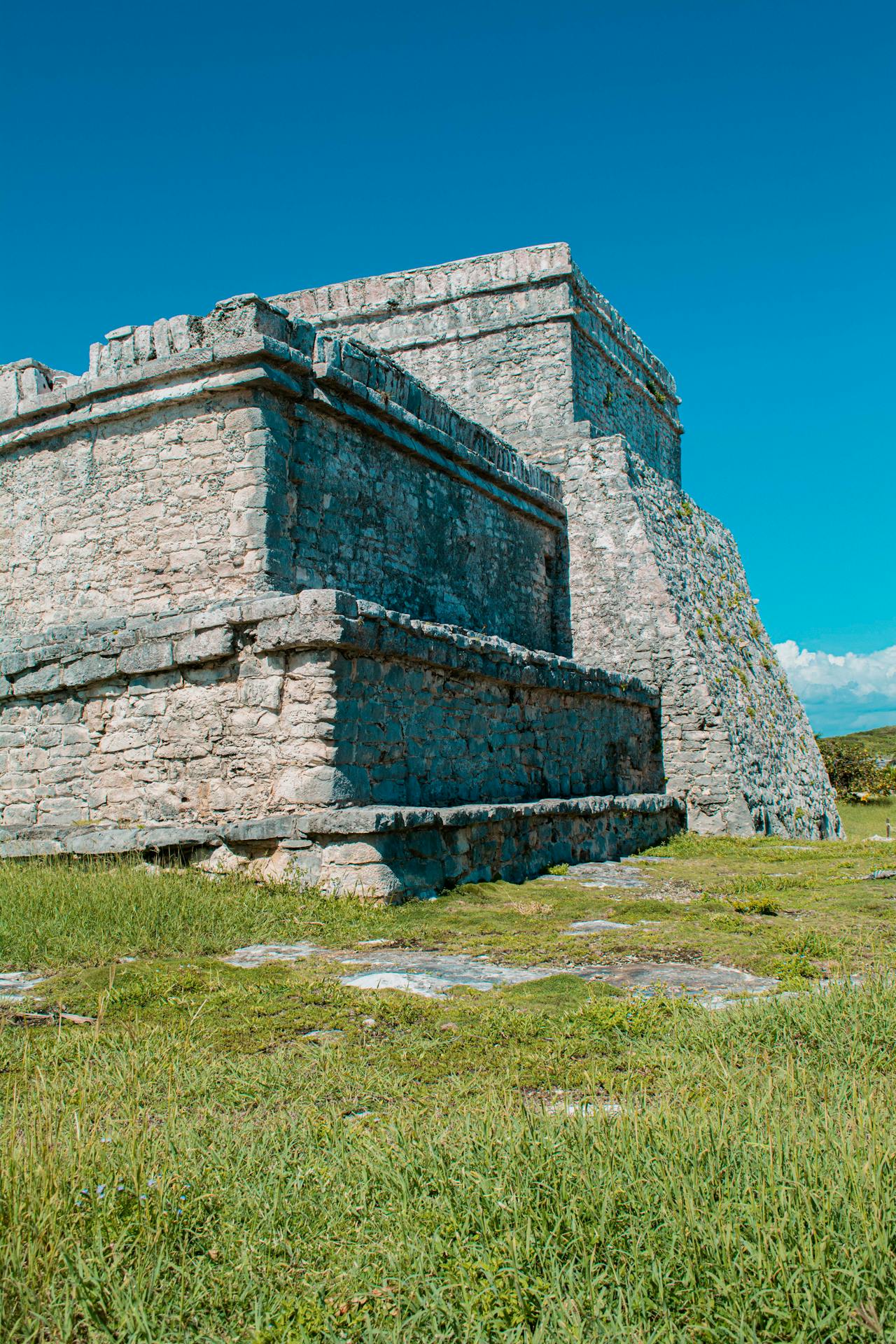
México · Tulum / Yucatán
Jungle and Cenote
Where the Maya jungle is not a backdrop but the protagonist. Buildings that grow from the earth rather than being placed upon it — and a code of construction that puts the tree before the building.
The canopy is non-negotiable
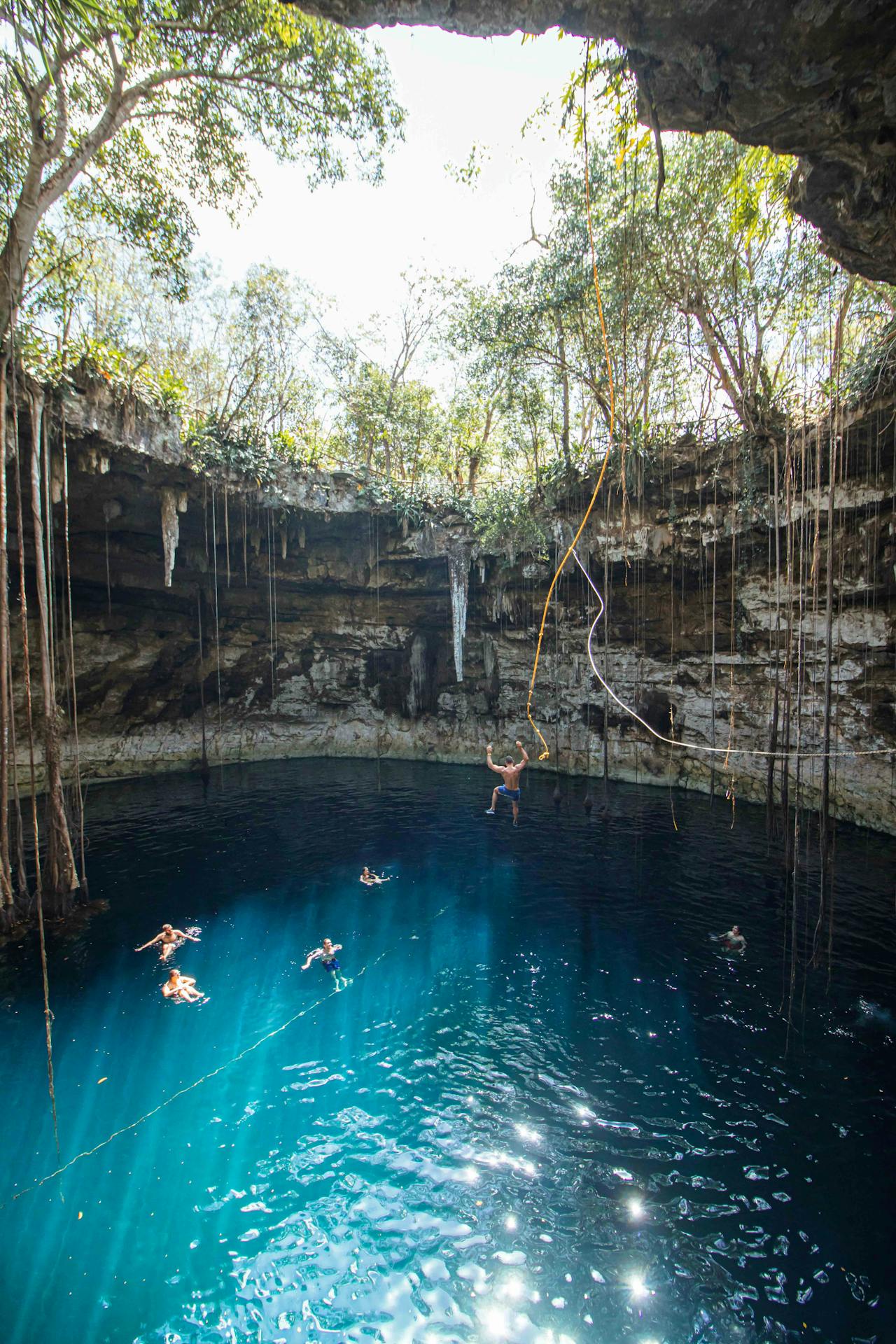
In Tulum's best developments, the first conversation is not about the floor plan — it is about which trees will remain. The Maya jungle operates as a complete ecological system: canopy, mid-story, understory, and the extraordinary underground river network that eventually opens at the surface as cenotes. Architecture that participates in this system is rewarded with shade, humidity regulation, and a quality of light filtered through layers of green that no artificial system can replicate.
The architectural response that has emerged from Tulum's best practitioners — Jesús Acosta, Espacio18, the teams behind Casa Xixim on Soliman Bay — builds around this hierarchy. Flat roofs become yoga decks at canopy level. Load-bearing columns appear between trees rather than replacing them. Board-formed concrete, left raw and textured, develops moss and lichen over time, becoming part of the biological layer rather than a foreign element placed upon it.
This is biophilic design not as an aesthetic strategy but as a structural one: the biology of the place as the organising principle of the build, rather than an afterthought applied to a building that has already been planned in ignorance of it.
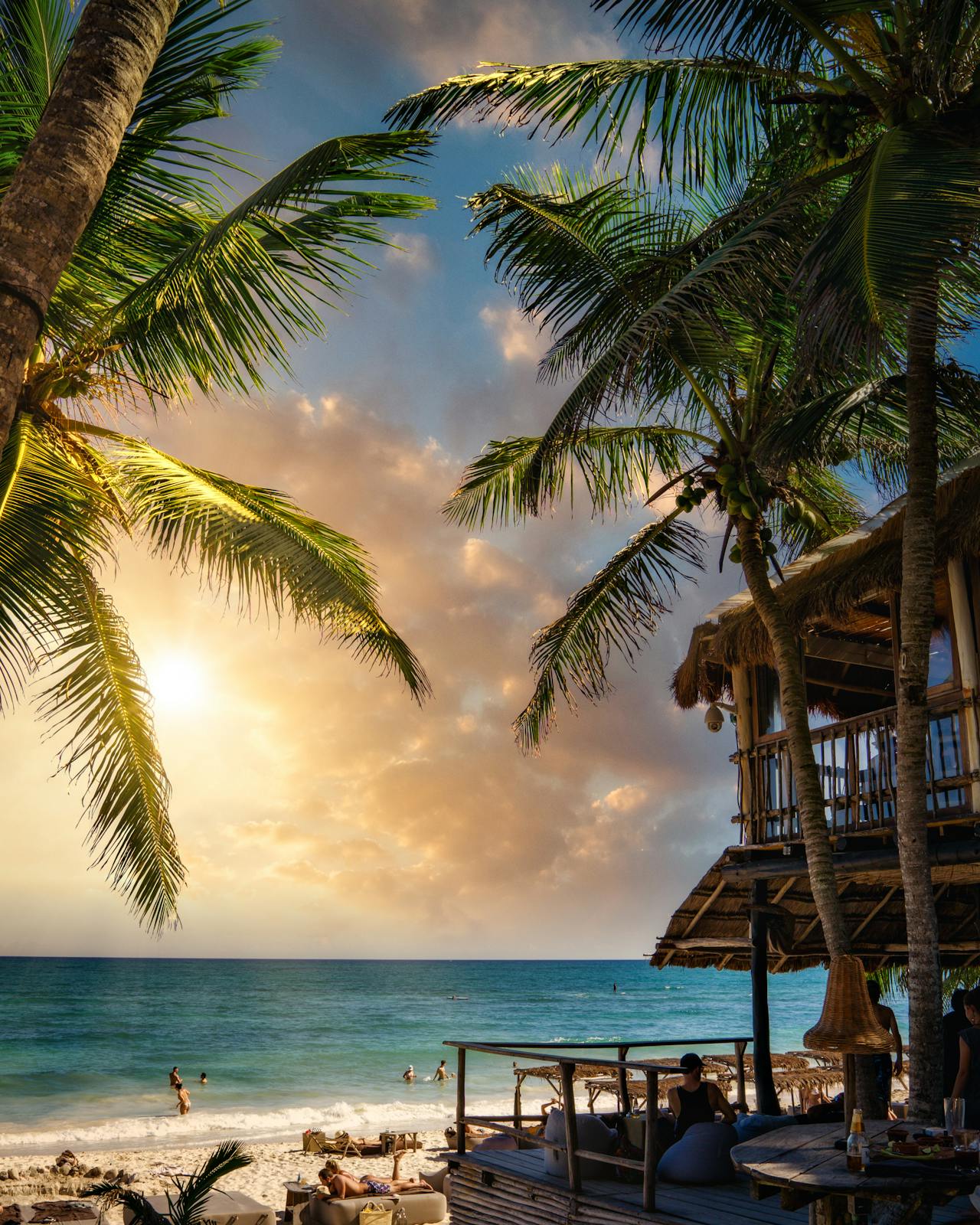
“The jungle taught Tulum's best architects a lesson they have not forgotten: the tree was there first. Design begins with that acknowledgement.”
Kaluma Living
Cenotes as the original architecture
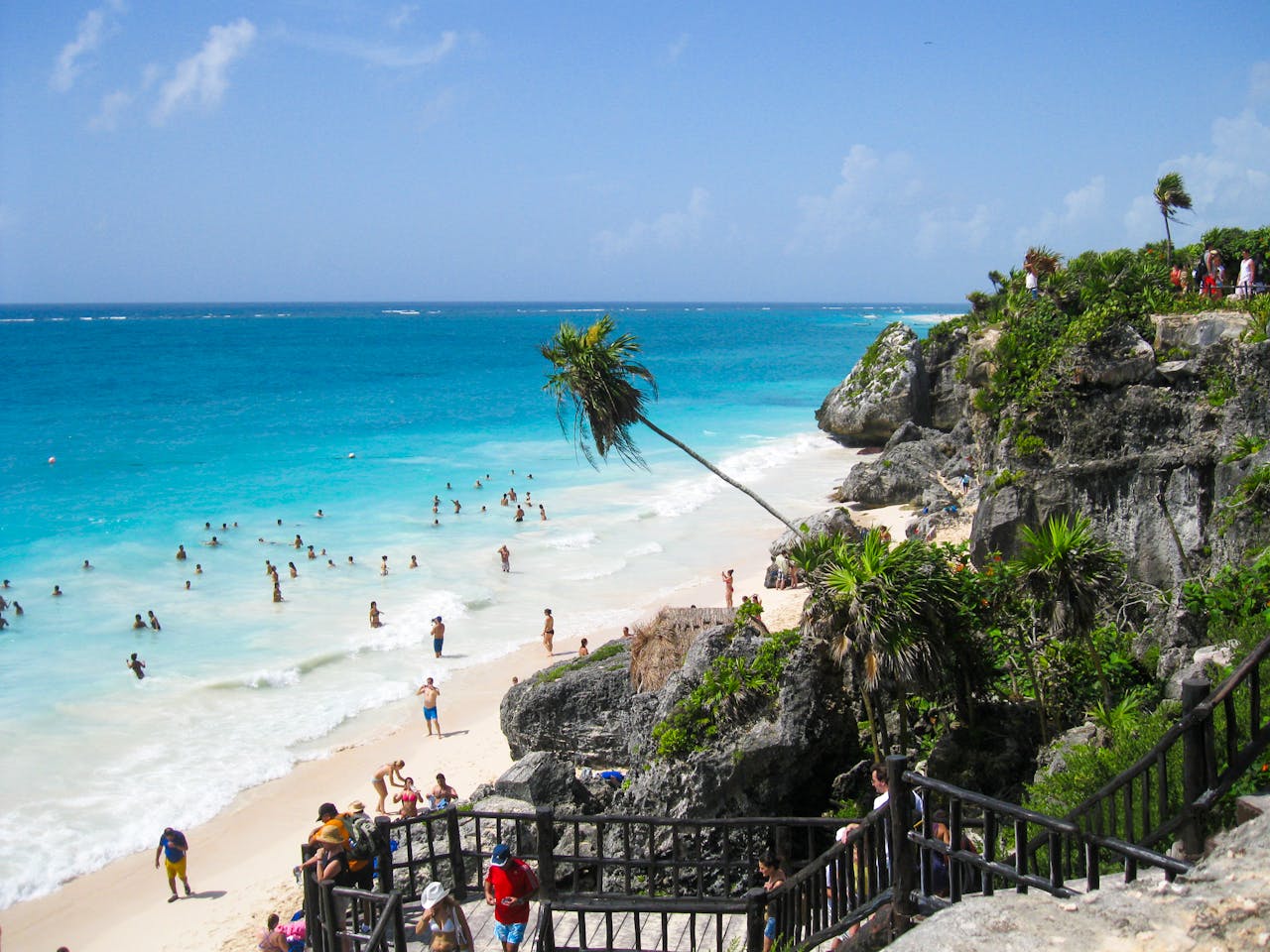
The cenote — the natural sinkhole that reveals the underground river system of the Yucatán — is Tulum's most extraordinary architectural element, and it predates every building on the peninsula by millennia. Where a cenote exists on a site, the only correct architectural response is subordination: build around it, light it from above, let it be the room.
This logic — that the existing natural feature is always more valuable than anything that could replace it — runs through Tulum's best residential architecture. The tree that shades the terrace is more valuable than a pergola. The prevailing breeze is more valuable than an air conditioning unit. The night sky, preserved by a development code that limits artificial light, is more valuable than illuminated facades. The cenote is simply the most dramatic expression of a principle that applies to every scale.
The hierarchy we bring to Andalusia
From Tulum, we take the principle that the natural feature is always the brief — not the client's programme, not the architect's signature. On the Costa del Sol, this translates to properties where the mature oak or olive tree was the first thing the architect drew around. Where the orientation was determined by the view corridor rather than the plot boundary. Where the terrace exists because the afternoon breeze arrives from that direction.
The cenote taught us that the most powerful spatial experience is one that the land provides rather than one that the building invents. We find properties in Andalusia that understand this — where the dramatic room is the one that opens onto the sierra, or the one where the morning light arrives at a particular angle that cannot be reproduced by artificial means.
Looking for a home that belongs to its landscape?
We curate properties on the Costa del Sol and Costa de la Luz where the relationship with nature is built in — not an afterthought, not a marketing claim, but the foundation of how the home was conceived.