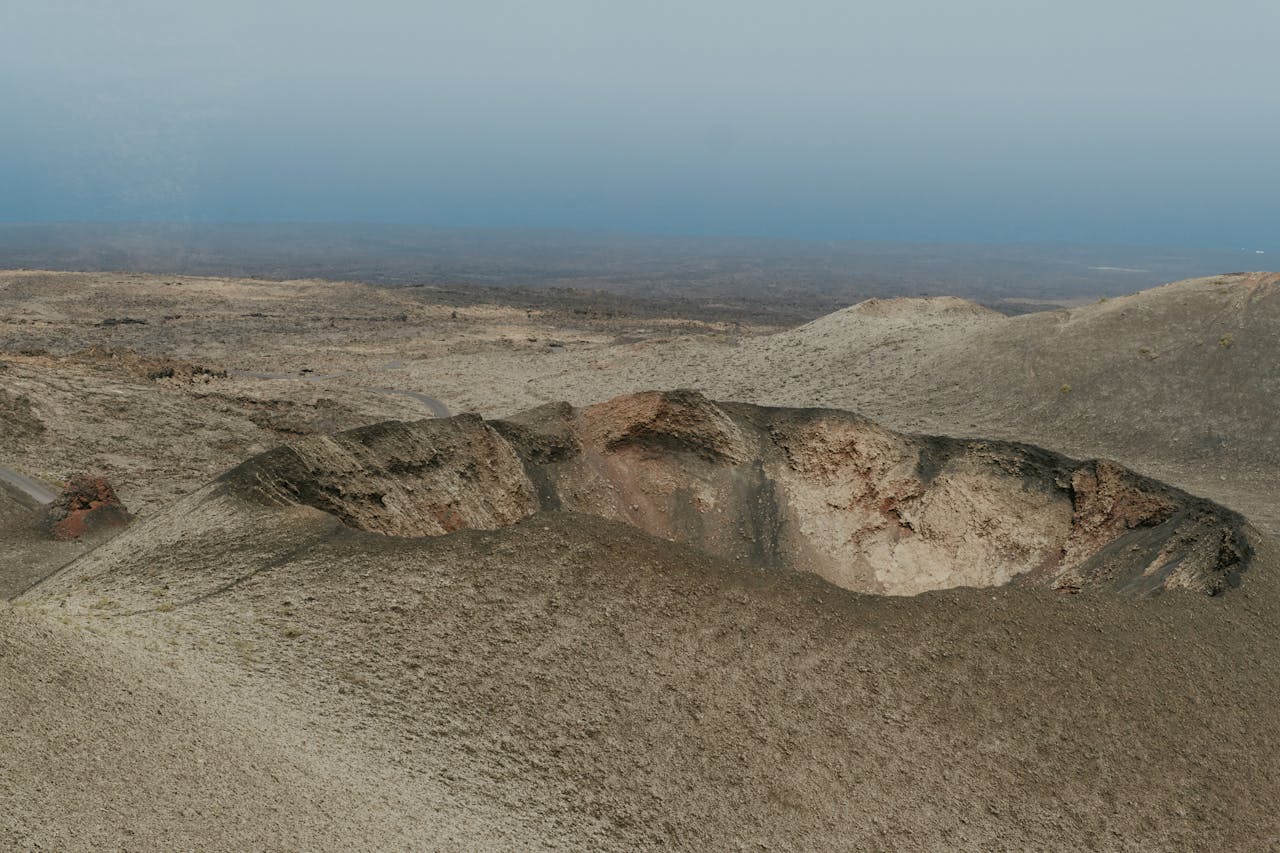
Islas Canarias · Lanzarote
Arte y Naturaleza — The César Manrique Vision
A man returned from New York to a volcanic island and decided that no billboard, no artificial structure, no commercial impulse would speak louder than the landscape. What followed was a philosophy that changed architecture.
320+
Sunny days per year
1993
UNESCO Biosphere Reserve
4,000
Years of volcanic lava
The First Place in Europe Without Billboards
César Manrique returned to Lanzarote in 1966 after two years in New York, disturbed by what urbanism was doing to human life. 'Man in New York is like a rat,' he wrote. 'There is an imperative need to go back to the soil.' He returned to his volcanic island and began dismantling billboards at night.
His philosophy — which he called Art-Nature — was radical restraint. Architecture should diminish to reveal, not dominate. Every intervention in the landscape had to earn its place by amplifying what was already there. At Jameos del Agua, he said: 'I did nothing more than underline the beauty that was already there.'
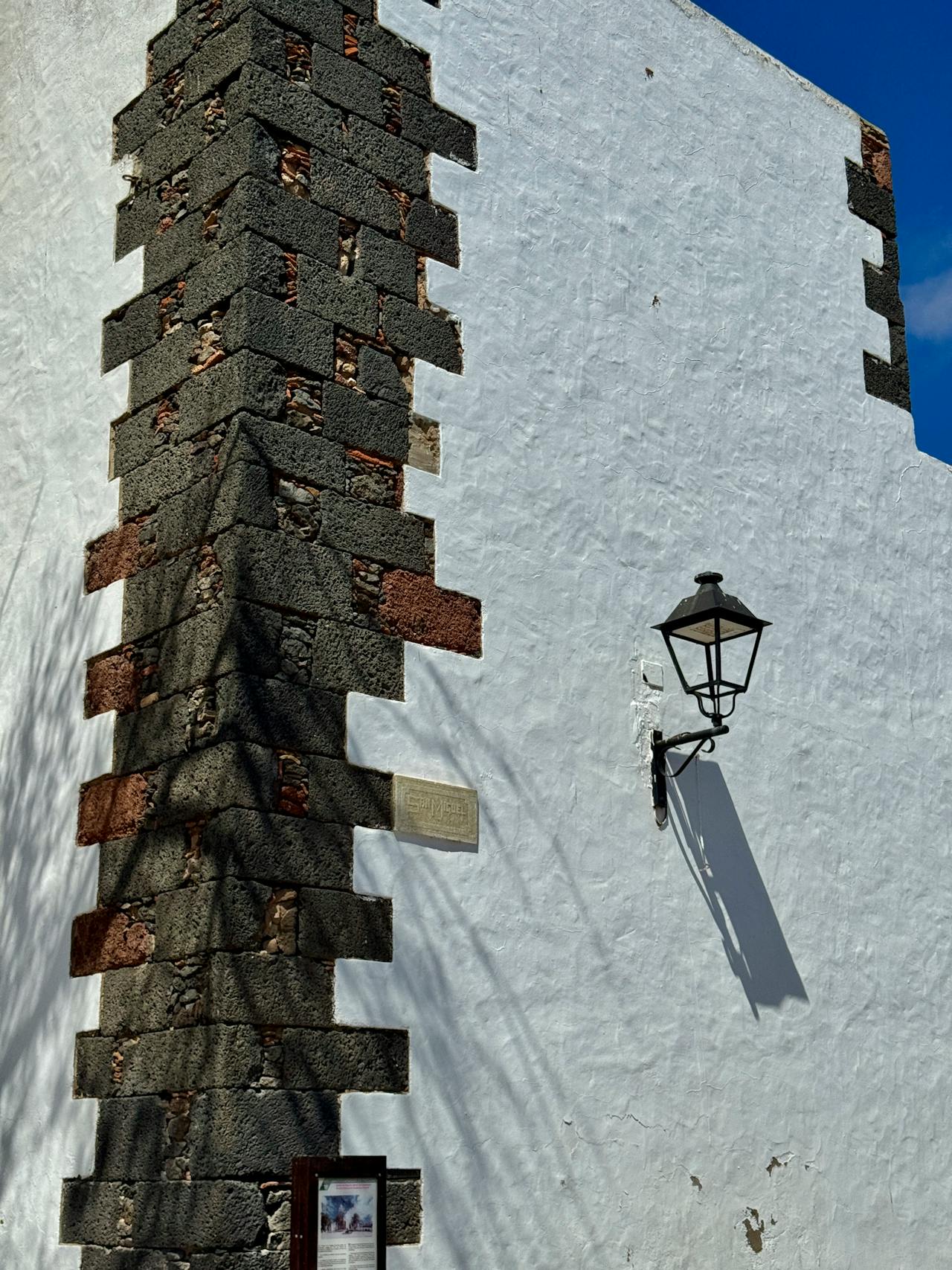
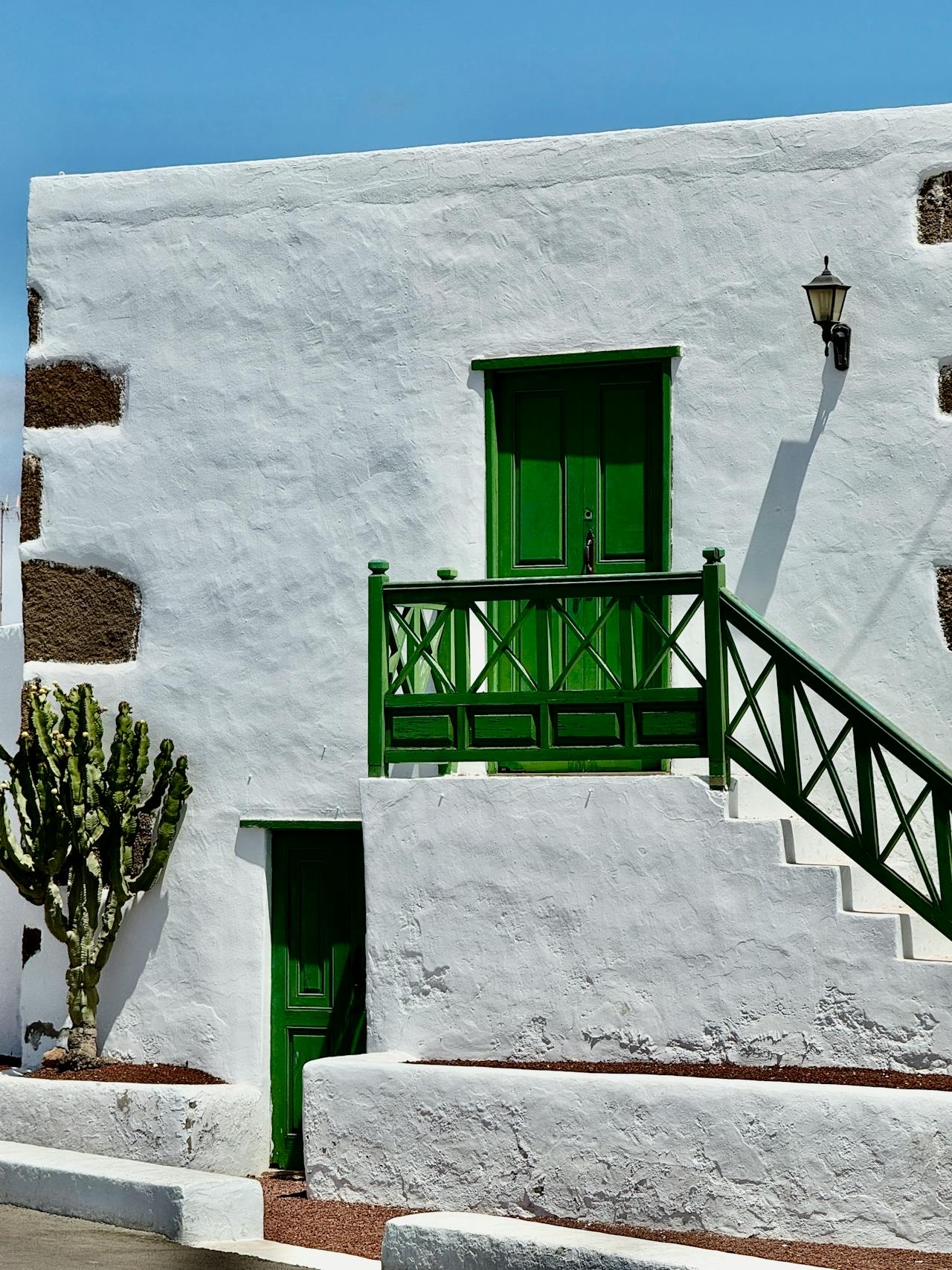
By 1976, Lanzarote had become the first place in Europe where advertising had been removed from the landscape. The island's buildings were painted in white, green, and blue — traditional Canarian colours designed to recede into the terrain rather than stand apart from it.
02 — Volcanic Architecture
Six Principles of Volcanic Construction
Lanzarote's architecture was shaped by catastrophe. Between 1730 and 1736, six years of eruptions covered a quarter of the island in lava and created 33 new volcanoes. From this violence emerged a material — basalt — with extraordinary architectural properties.
Basalt as Thermal Mass
The porous, cellular structure of volcanic basalt contains networks of air pockets formed during rapid cooling. These pockets resist heat conduction and create temperature differentials of up to 6.7°C between exterior and interior — natural air conditioning without mechanical systems.
Lava Tubes as Rooms
At Casa-Museo Tahíche and Jameos del Agua, Manrique excavated five natural volcanic bubbles — gas pockets within cooled lava — and interconnected them through passages cut through basalt. He didn't build within the landscape; he excavated it.
Cross-Ventilation Strategy
Traditional Canarian design places windows on opposing walls to create continuous air flow. Combined with hollow partition walls acting as vertical air channels, this passive system harnesses the island's Atlantic trade winds as a natural cooling mechanism.
White Over Dark
The contrast between blackened lava and brilliant white plaster is deliberate philosophy. The structure appears to float above the volcanic ground — architecture and geology in perpetual visible dialogue.
The Geria Precedent
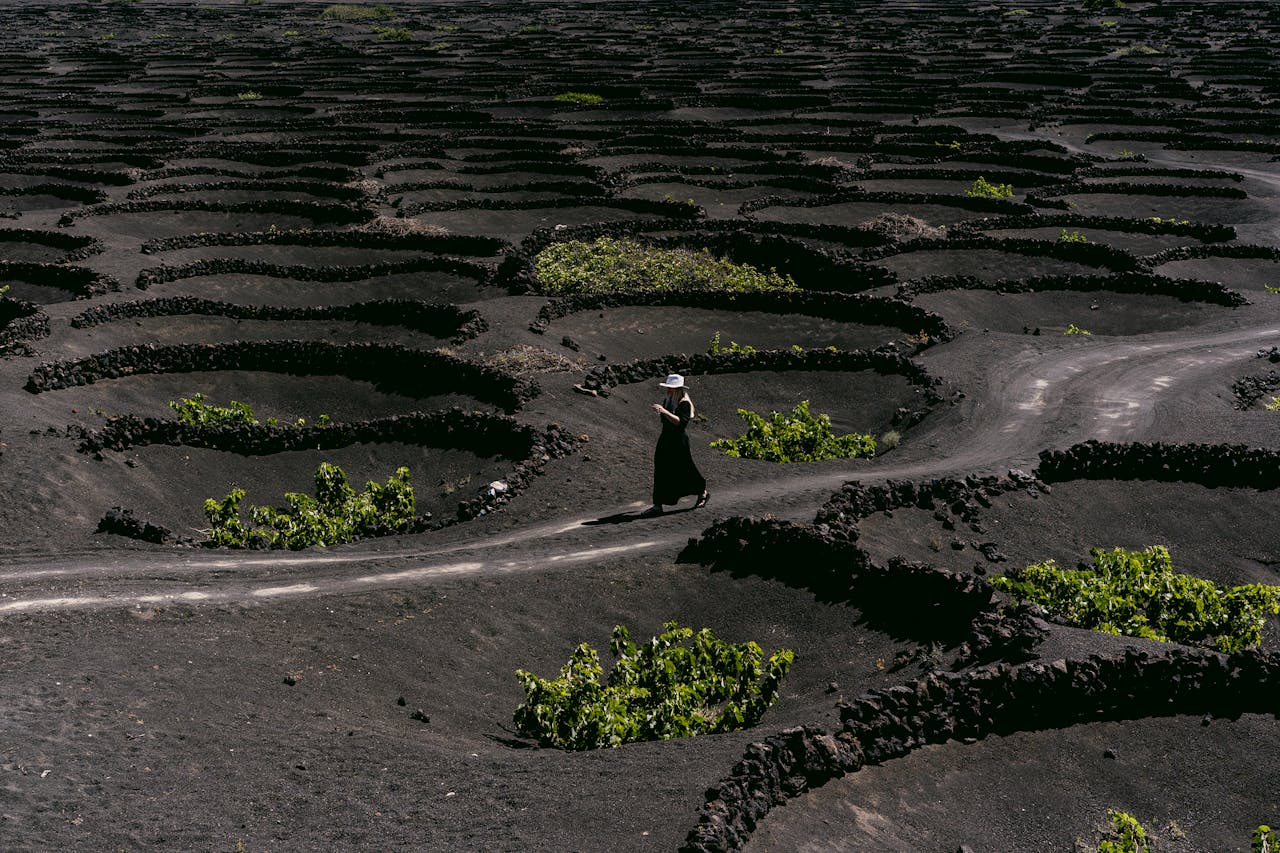
In Lanzarote's wine region, traditional builders dug semi-circular stone walls around individual vines — protecting them from trade winds, retaining moisture, and using volcanic rock as thermal battery. Vernacular intelligence that preceded Manrique by centuries.
UNESCO Validation
In 1993, one year after Manrique's death, UNESCO designated Lanzarote a Biosphere Reserve. The recognition was explicit: his life's work harmonizing human creativity with ecological integrity was a global model for sustainable development.
“I did nothing more than underline the beauty that was already there.”
César Manrique, on Jameos del Agua
03 — The Works
Architecture From Lava and Light
Four projects define Manrique's legacy on Lanzarote. Each is a lesson in restraint — in knowing what to build, what to leave, and what to simply make visible.
1966
Jameos del Agua
Within a 6-kilometre lava tube formed 4,000 years ago by Monte Corona's eruption, Manrique created a sequence of spaces by choreographing light, silence, and stone. A subterranean lake regulated by the Atlantic, an auditorium carved from lava, a restaurant nestled in volcanic chambers. Not built — revealed.
1968
Casa-Museo Tahíche
Manrique's own home, built within a lava coulee from the 1730-1736 eruptions. Five natural volcanic bubbles interconnected by passages cut through basalt become swimming pool, living quarters, and dance floor. The house is contained by the volcano; the volcano is the house.
1973
Mirador del Río
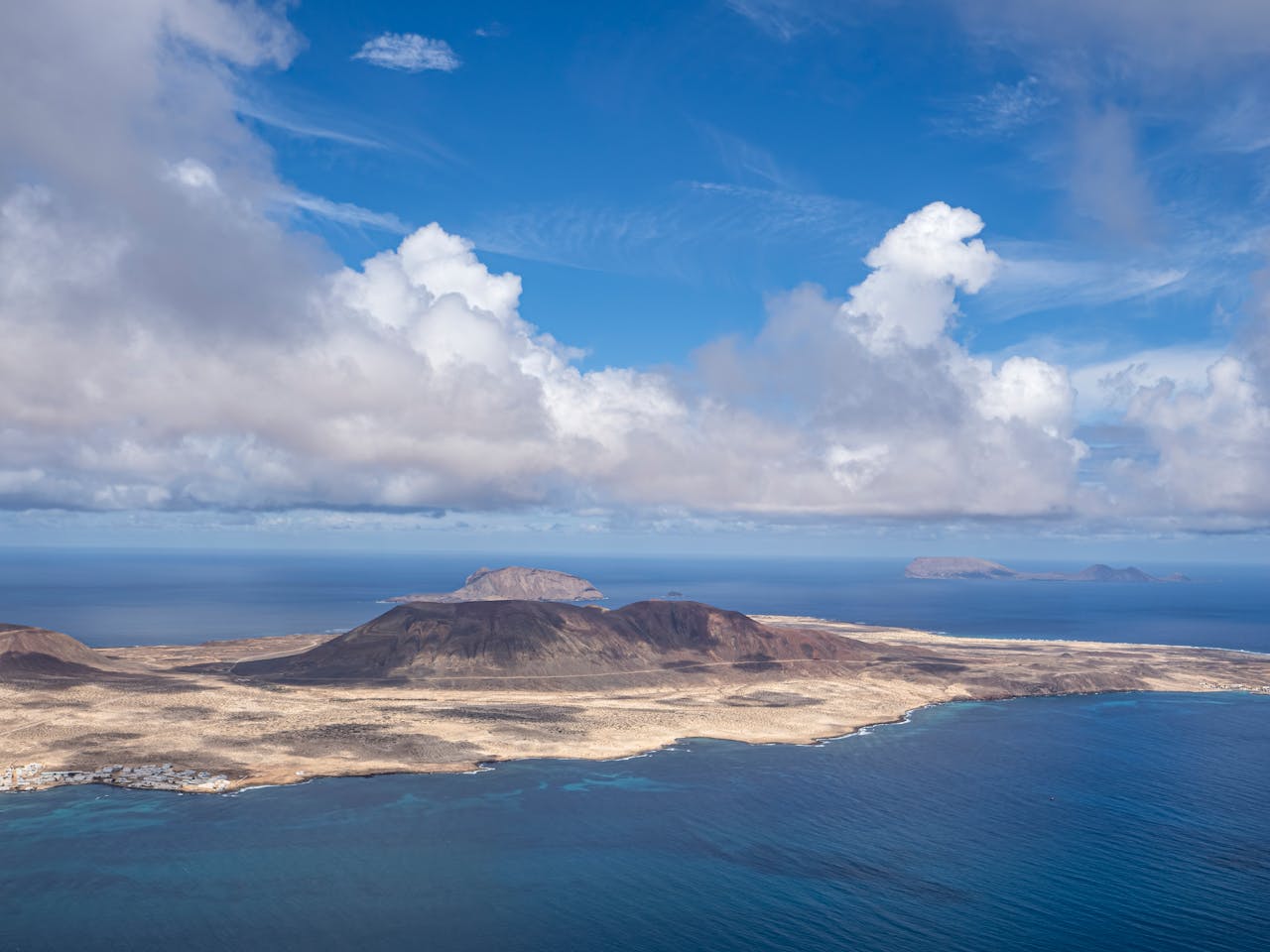
Carved directly into clifftop rock at 475 metres above sea level, with flowing organic forms that emerge from rather than impose on the landscape. The viewing platform appears to float between earth and horizon, framing the Chinijo archipelago across still Atlantic water.
1990
Jardín de Cactus
An abandoned quarry transformed into a botanical sanctuary: 4,500 specimens, 450 species, terraced layouts following the natural contours of the quarry. Manrique's final major work before his death — a lesson in knowing what to leave alone.
04 — Lifestyle
320 Days of Sun. One Island. Zero Billboards.
The Canary Islands proposition for luxury living is unique in Europe. Not proximity to a capital, not historical prestige, but something more fundamental: climate as wellness infrastructure.
The Light That Never Leaves
320+ sunny days per year. Average winter temperature 19°C. A seasonal range of just 6°C. This is not a summer destination — it is a permanent climate, consistent and generous. The natural light that architects spend careers chasing arrives here every morning, without effort.
Protected by Design, Not Accident
UNESCO Biosphere Reserve status is enforceable policy, not honorary title. It restricts development permissions, mandates environmental impact assessments, and protects endemic species — including the blind lobster of Jameos del Agua, found nowhere else on Earth.
Rarity as Investment Logic
Biosphere designations combined with strict Canarian planning regulations create genuine supply constraints. Unlike Mediterranean coasts saturated with similar developments, Lanzarote offers the kind of scarcity that makes property values structurally sound over time.
Why Canarias Inspires Kaluma
A Philosophy We Bring Back to the Mainland
Restraint as the highest form of design
Manrique demonstrated that the greatest architectural act is sometimes knowing what not to build. This idea — that a home earns its place in a landscape by amplifying rather than dominating it — shapes how we evaluate every property we recommend.
Material honesty and geological time
Basalt doesn't lie about what it is. Architecture built from authentic materials carries geological history. On the mainland, we look for the same: local stone, honest finishes, materials that belong to the place they occupy.
Passive design before it had a name
Manrique and Lanzarote's traditional builders achieved cross-ventilation, thermal mass, and solar orientation centuries before these had names. We apply the same principles to our curation on the Costa del Sol, where the Mediterranean logic is identical.
Common questions
Canarias — Frequently asked
¿Qué es la filosofía Arte-Naturaleza de César Manrique?
Arte-Naturaleza es el término que César Manrique usó para describir su enfoque integrador: toda intervención humana en el paisaje debe ganarse su lugar amplificando la belleza que ya existe, no dominándola. Manrique aplicó este principio en Jameos del Agua, Casa-Museo Tahíche, Mirador del Río y Jardín de Cactus — obras que no construyeron sobre el paisaje volcánico de Lanzarote, sino que lo revelaron. En 1976, Lanzarote se convirtió en el primer lugar de Europa donde la publicidad había sido eliminada del paisaje gracias a su activismo personal.
¿Cuáles son las propiedades térmicas de la construcción con basalto volcánico?
El basalto volcánico tiene una estructura porosa y celular creada durante el enfriamiento rápido de la lava. Esta red de bolsas de aire resiste la conducción de calor y puede crear diferenciales de temperatura de hasta 6,7°C entre el exterior y el interior — un sistema pasivo de climatización sin necesidad de maquinaria. Combinado con ventilación cruzada (ventanas en paredes opuestas) y el efecto chimenea de los muros huecos, la arquitectura volcánica tradicional de Lanzarote ofrece confort climático con cero consumo energético mecánico.
¿Por qué Lanzarote es Reserva de Biosfera de la UNESCO?
En 1993, un año después de la muerte de César Manrique, la UNESCO designó Lanzarote Reserva de Biosfera en reconocimiento explícito a su trabajo de toda una vida armonizando la creatividad humana con la integridad ecológica. La designación no es honorífica: restringe los permisos de desarrollo, exige evaluaciones de impacto ambiental y protege especies endémicas como la langosta ciega de Jameos del Agua, que no se encuentra en ningún otro lugar de la Tierra. Esta protección crea una escasez real que hace que los valores inmobiliarios en Lanzarote sean estructuralmente sólidos.
Kaluma Living
Inspired by the Canarian Lesson
We look at what Manrique built — and the discipline with which he built it — and bring that same question back to the Costa del Sol: does this home earn its place in this landscape?