8 min read
Living Well · January 2025
Wellness Lifestyle on the Costa del Sol: The Real Reasons Marbella Draws Health-Conscious Buyers
Three hundred days of sunshine, the Mediterranean diet, 70+ golf courses, padel courts in every town, and a growing concentration of serious wellness practitioners — why the Costa del Sol has become Europe's most liveable coast.
Wellness has become one of the most overused words in luxury property marketing. It is applied to everything from infrared saunas to pillow menus, until the word loses meaning entirely. But there is a version of it that is real, and southern Spain has always had it — it just didn't call it anything.
The climate argument
Three hundred days of sunshine a year is not a marketing claim — it is a meteorological fact for much of the Costa del Sol. The implications for daily life are significant and cumulative. Outdoor activity becomes a default rather than a weekend treat. Vitamin D is not something you supplement; it is something the air provides. The body adjusts to regular exposure to light and warmth in ways that compound over months and years.
Winter on the Costa del Sol is mild enough that lunch outside in January is unremarkable. This matters more than it sounds. The seasonal contraction that accompanies northern European winters — the narrowing of life into interiors, the dimming of natural light from October to March — simply does not happen here in the same way. The calendar opens rather than closes.
Food as medicine
The Mediterranean diet needs no further advocacy here. What is worth noting is that in Andalucía, it is not an aspiration — it is the default. The fish comes from the Atlantic or the Mediterranean the same morning. The vegetables are grown in the campo thirty minutes away. Olive oil, garlic, legumes, and fresh produce are the foundation of every meal — not the exception. The weekly market in almost every town sells food of a quality that supermarkets in northern Europe approximate but never quite reach.
“You do not have to try to eat well here. The infrastructure of good food already exists. You simply have to participate in it.”
Outdoor sport as infrastructure
The Costa del Sol has the highest concentration of golf courses in Europe — over 70 within an hour of Marbella. But golf is only part of the picture. Padel has grown faster here than anywhere else in the world; a town of any size has at least six courts, and social padel is the primary way that international residents actually meet each other. Road cycling in the Sierra Nevada draws professionals year-round. Hiking trails through the Sierra Blanca and Serranía de Ronda are extensive and genuinely spectacular. Water sports — kitesurfing, SUP, sailing — run from April through November without interruption.
The physical infrastructure of an outdoor life is not something you construct here. It already exists. The question is only what you choose to engage with.
Pace as a design choice
The pace of life in Andalucía is slower than in northern Europe — and this is not a euphemism for inefficiency. It is a deliberate cultural orientation toward presence. Lunch takes two hours. The evening paseo happens, unhurried. Time is something to inhabit rather than manage. For buyers who have spent decades in cities where pace is equated with productivity, this recalibration is often the most surprising and the most valued aspect of living here.
The pool and the views are real. But they are not what people mention when they explain why they stayed.
The wellness infrastructure
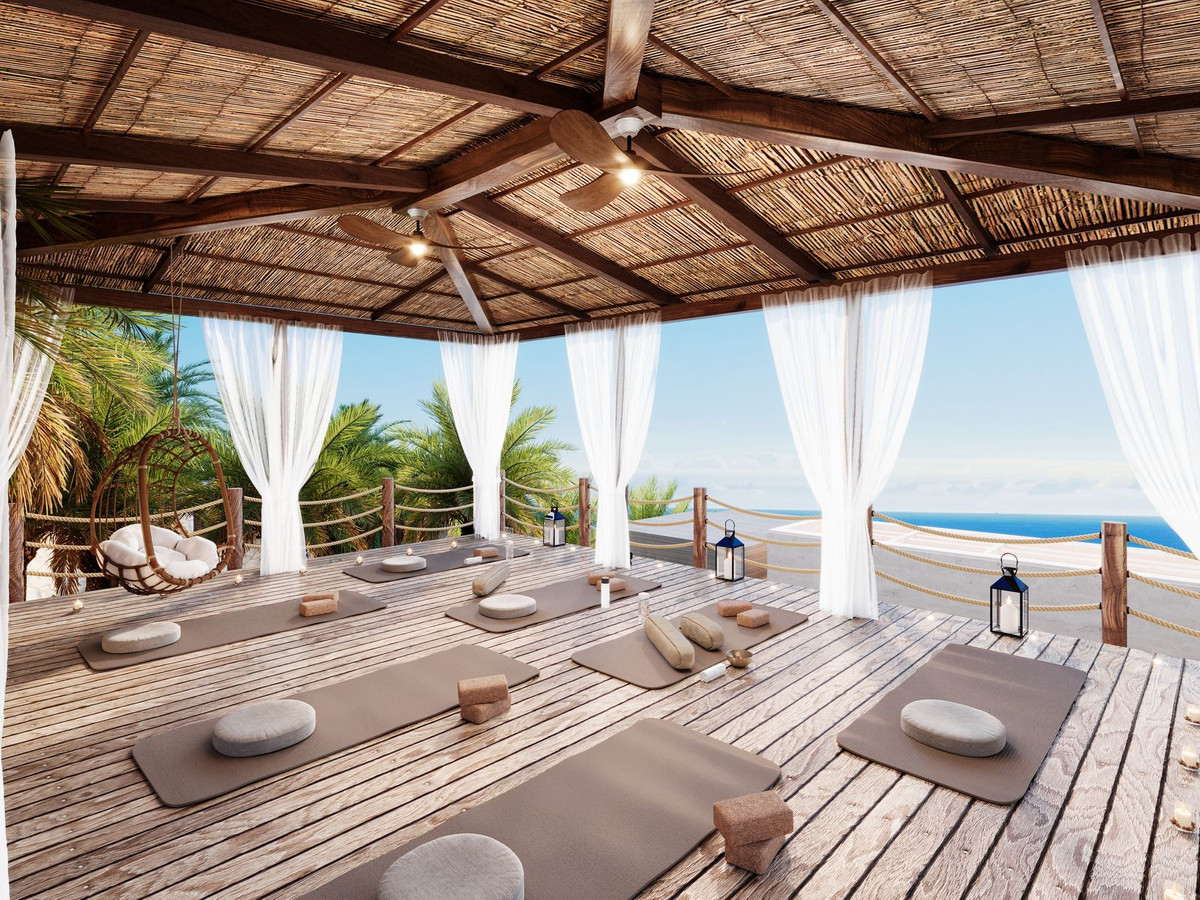
The formal wellness infrastructure has followed the interest. The Costa del Sol now has serious medical spas, high-quality yoga and Pilates studios, functional medicine clinics, and a concentration of practitioners — osteopaths, naturopaths, nutritional doctors, psychologists — that reflects the demand from a health-conscious international population. The gap between Marbella and a major European city in terms of specialist health services has narrowed considerably over the past decade.
The Marbella Clinic, HM Delfos, and several private medical facilities operate to a standard that genuinely competes with major European hospitals for elective and specialist care. For buyers who want both the lifestyle and the reassurance of serious medical access, the combination now exists in a way it did not fifteen years ago.
None of this is accidental. It is the consequence of a sustained influx of people who came here specifically to live differently, and who brought their standards with them.
Interested in the market?
We can help you find the right property.